Provide Continuous Fresh, Cool Water
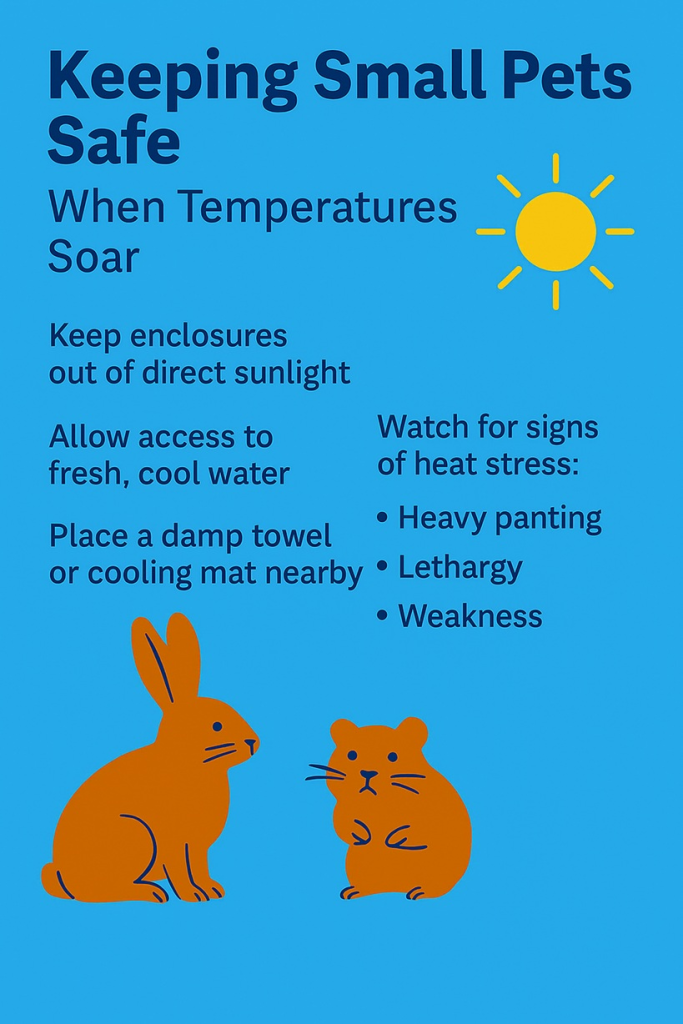
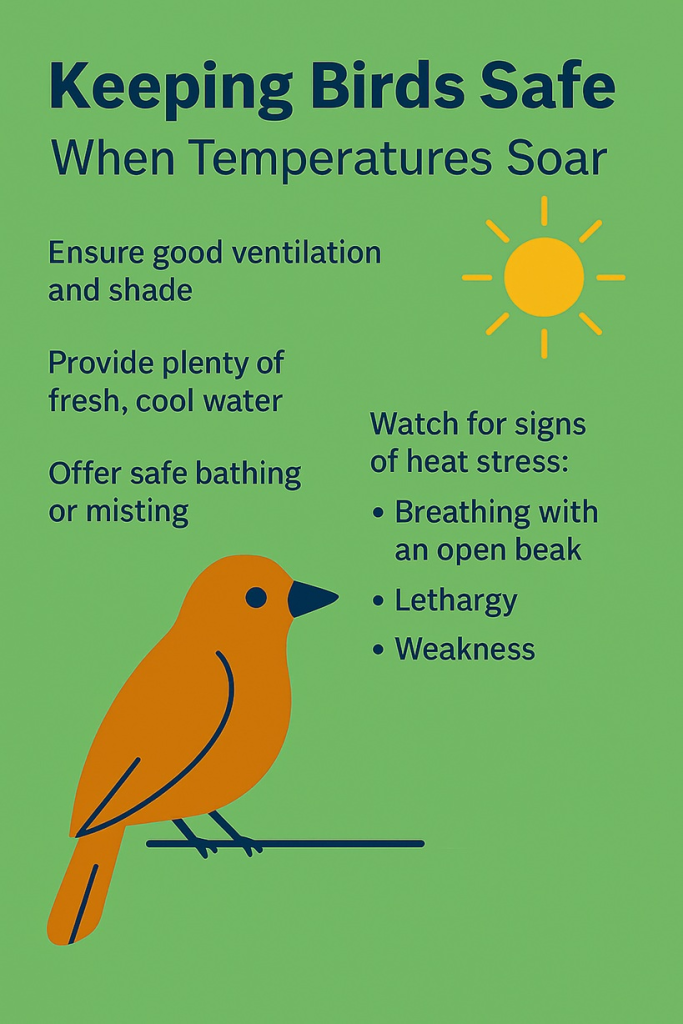
Hydration is the first line of defense. Ensure that all pets have constant access to clean, cool water. For dogs and cats, keep multiple water bowls in shaded areas and top them up regularly. Add ice blocks throughout the day to help the water stay cooler for longer. For birds and small mammals, ensure their water dispensers are functioning properly and not warmed by direct sunlight. Misting spray bottles can also help parrots and certain birds cool off, while rabbits appreciate a frozen water bottle placed next to them to lie against.
Create Shaded, Well‑Ventilated Spaces
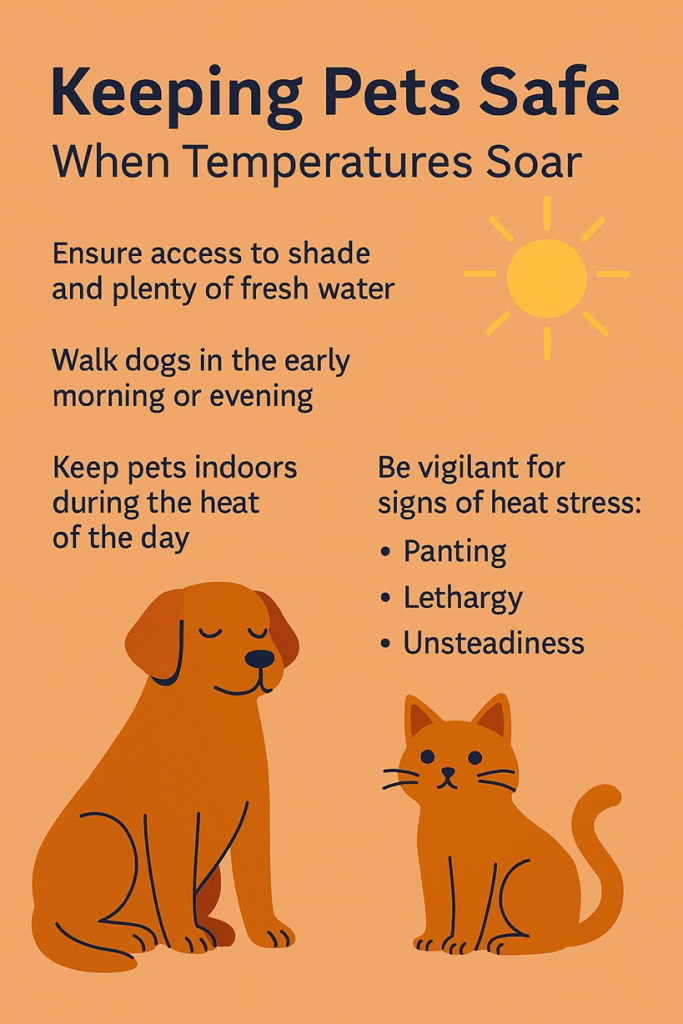
Shade alone isn’t enough—proper airflow is essential. Bring outdoor pets inside during peak heat (usually between 11:00 and 16:00). For dogs and cats that must remain outdoors, ensure they have deep shade, such as a patio, trees, or UV-resistant outdoor fabric. Birds should never be left in direct sunlight; move cages indoors or under ventilated shade. Small mammals in hutches must be relocated to cooler indoor environments, as enclosed wooden structures trap heat extremely quickly.
Limit Outdoor Activity
Exercise should be reduced to early mornings and late evenings, when temperatures are lower. Asphalt and paved surfaces can burn paws, so always test with your hand: if it’s too hot for you to touch comfortably, it’s too hot for your pet to walk on. Cats typically self-regulate their activity, but try to keep them indoors during extreme heat.
Use Cooling Aids
Simple cooling tools can make a big difference. Damp towels, cooling mats, fans, or even a shallow kiddie pool for dogs can help them lower body temperature. Long-haired breeds may benefit from a summer trim—but avoid shaving cats or dogs completely, as some fur provides sun protection. Birds enjoy mist baths, while rodents and rabbits benefit from ceramic tiles placed in their enclosure for cool resting spots.
Avoid Hot Cars at All Costs
Even on mild days, temperatures inside a parked car can rise dangerously within minutes. During a heat wave, it becomes deadly even faster. Never leave any pet in a parked car, not even for a moment.
Recognise Signs of Heat Stress
Look out for excessive panting, drooling, lethargy, vomiting, rapid breathing, or disorientation. Birds may hold their wings away from the body and breathe with an open beak. Small mammals may lie sprawled and unusually still. If you notice these signs, start cooling your pet immediately and contact a veterinarian.