
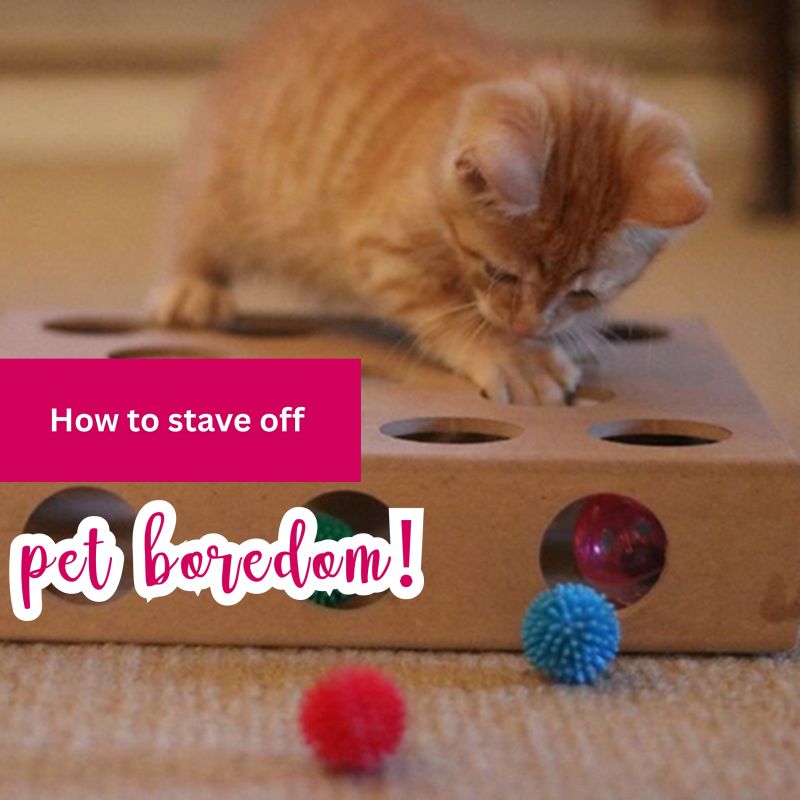
How can you tell if your pet is bored?
So how can you tell if your pet is experiencing boredom? Most often, boredom is going to result in negative behaviors, such as chewing your shoes, furniture, destroying your garden, clawing, whining, barking, depression and even aggressiveness. While younger pets and working dog breeds may need the most stimulation, any pet can become bored.
How you can help your dog to stave off boredom
If your dog is bored, you can come home to multiple holes dug in your garden, your couch chewed to pieces and your washing on the floor. Your dog is waiting just for you so that their favorite time of the day can start: family and play time!
1. Exercise and playing
Dogs need to get out for exercise daily. Boredom and obesity often go hand in hand for dogs; some owners often do not recognize obesity as frequently as they need to. With some dogs, just walking every day is not enough to stave off boredom or weight gain. Consider taking your dog to a new environment. Even riding in the car to a new place can be mentally stimulating for a dog), or doing a new activity, game, or learning a new behavior.
If you exercise, e.g., running or riding a bike, and if possible and your dog is able, take your doggie with: this promotes added mental stimulation in addition to fitness. The task at hand will lead to increased energy use and your dog would need to focus, which is mental stimulation as well – they must now also pay attention.

2. Socialize
Socialization is such an important aspect of training. It can help your dog to interact a lot more with their general outside world and they will be more entertained. It should also help them to interact more easily with humans as well. Dogs that get stimulated socially are less likely to be isolated and bored. This process works best during puppyhood. The first eight to 10 weeks are extremely important for puppies to be exposed to all different aspects of the environment, people and other pets. We need to help them to get accustomed to that so that when they are adult dogs, they are not scared of their different environments and meeting new people. Something to consider is play dates with other dogs. Not only is that great, but pairing dogs with comparable temperaments and play styles is beneficial not only for your dog but for the play dog also.

3. Food puzzles and snuffle mats
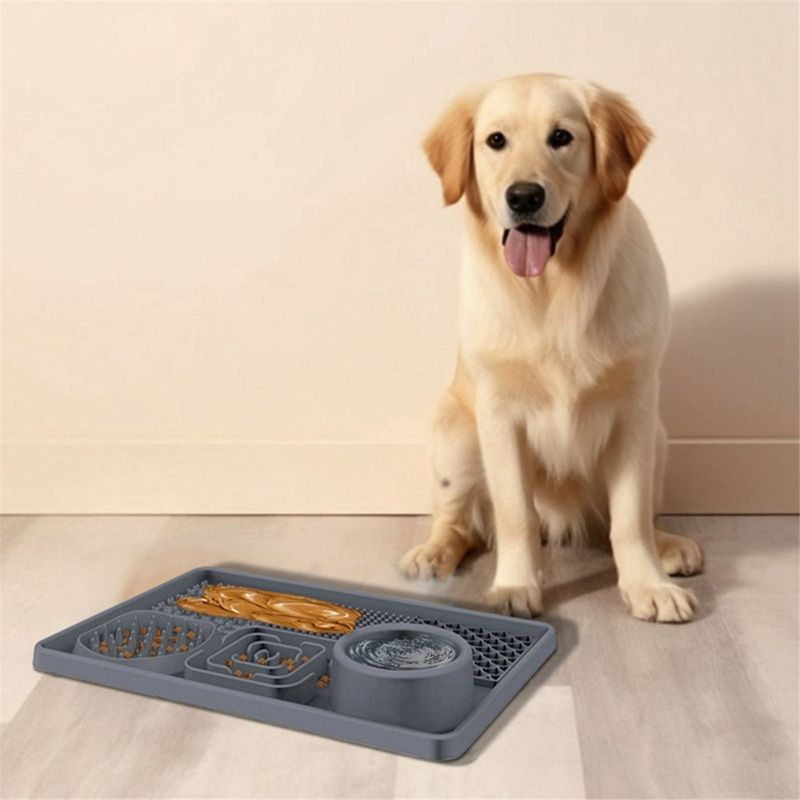
Alleviating dog boredom can be as simple as changing your feeding routine! Make it a fun and surprising event. Yes, adding food to a bowl is easy, but using a food puzzle or snuffle mat for their dry food, and a lick mat for wet food, can really spice up mental stimulation. By hiding the food or spreading wet food, you teach your dog to use their nose, brain, and body to get the rewards.
4. Put Your Dog to “Work”
Many dogs, especially working, herding, and hunting breeds, must be put to work. Fortunately, it can be relatively easy. It can be any kind of task or game that involves work. When boredom strikes it is often a high energy dog that lacks stimulation. He might have been paired with a low-energy family, which is problematic. If these dogs are not being kept busy by walking, working, and playing, they will become inherently sort of excited but have nowhere to release their excess energy. That could lead to them tearing up your garden and becoming aggressive.
You can put them to work” with games such as “nose work” which can be so simple as identifying certain things in the home (“where is your ball?,” hiding treats and encouraging your dog to find them. Teaching new behaviors and tricks can also feel work-like to a dog, and exercise can even include an element of work.
Should you include them in your training routine (riding a bike outside or jogging) they become a running partner or an agility partner, where they go out, “train” and have a “job” to do.

5. Enroll them in a class
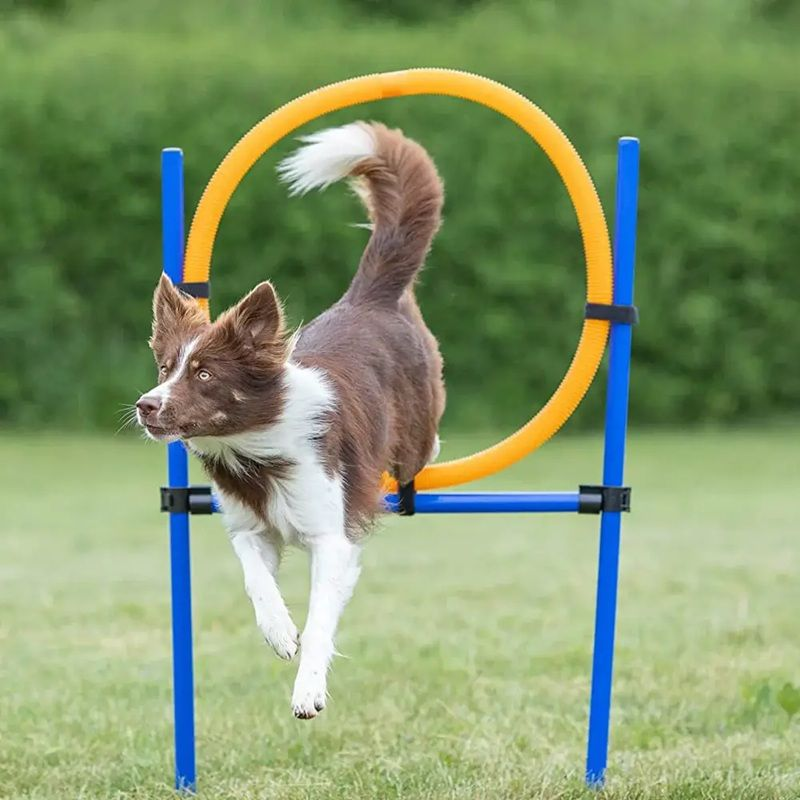
If you have the means, enrolling your dog in a class with a local trainer can be a wonderfully stimulating way to relieve boredom. If your dog enjoys nosework, for example, a class can take it to the next level. Other options for classes include obedience and agility training. That is a high energy event and will help them to release their energy. It also involves obedience, and they will feel like they have a “job”. They need to focus too therefore their bodies and minds are being stimulated.
How you can help your cat to stave off boredom
Living indoors or staying inside more because of colder and maybe wet weather, provides a safe and comfortable environment for our beloved feline friends.
Enrichment activities are the perfect solution to engage your cat’s natural instincts and keep them entertained. We have put together a variety of creative and practical enrichment ideas that will make your indoor cat’s life more exciting and fulfilling.
1. Use puzzle feeders and interactive toys
Just like dogs, cats can benefit from turning their typical mealtime routine into an enrichment activity. Puzzle feeders and interactive toys encourage mental stimulation by making your cat work for their food.
Puzzle feeders dispense small amounts of kibble when your cat interacts with them, stimulating their hunting instincts and providing a rewarding challenge.
Lick mats can be used for wet food, which also puts their brain to work.

2. Take advantage of vertical spaces
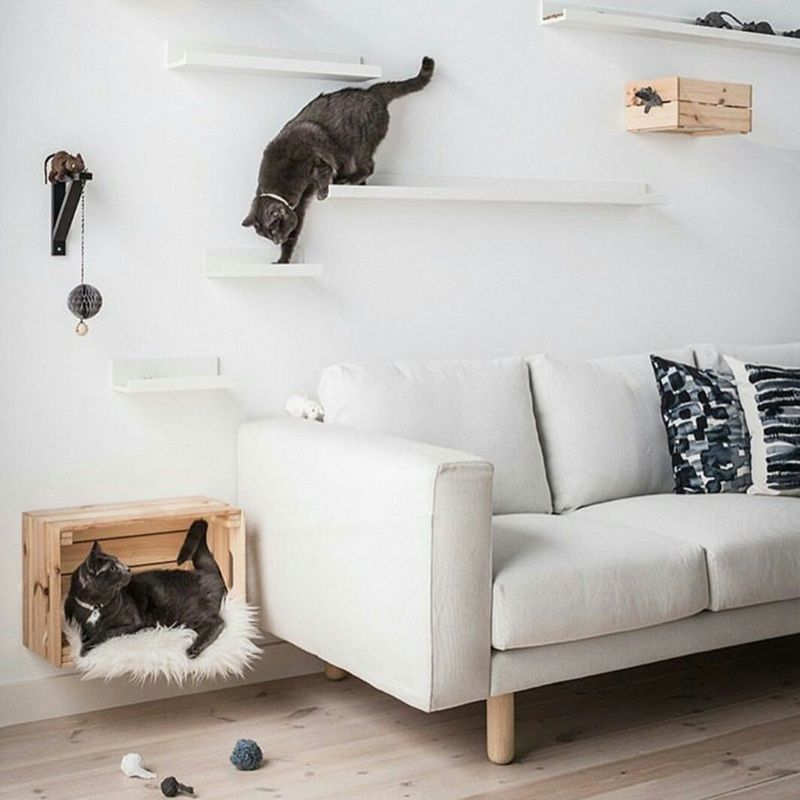
Cats love to climb and explore their surroundings from different perspectives. Create vertical spaces in your home to satisfy their climbing instincts.
Install cat trees, wall-mounted shelves, or provide sturdy, carpeted perches. Vertical spaces not only offer exercise opportunities but also allow cats to observe their territory, providing mental stimulation and a sense of security.
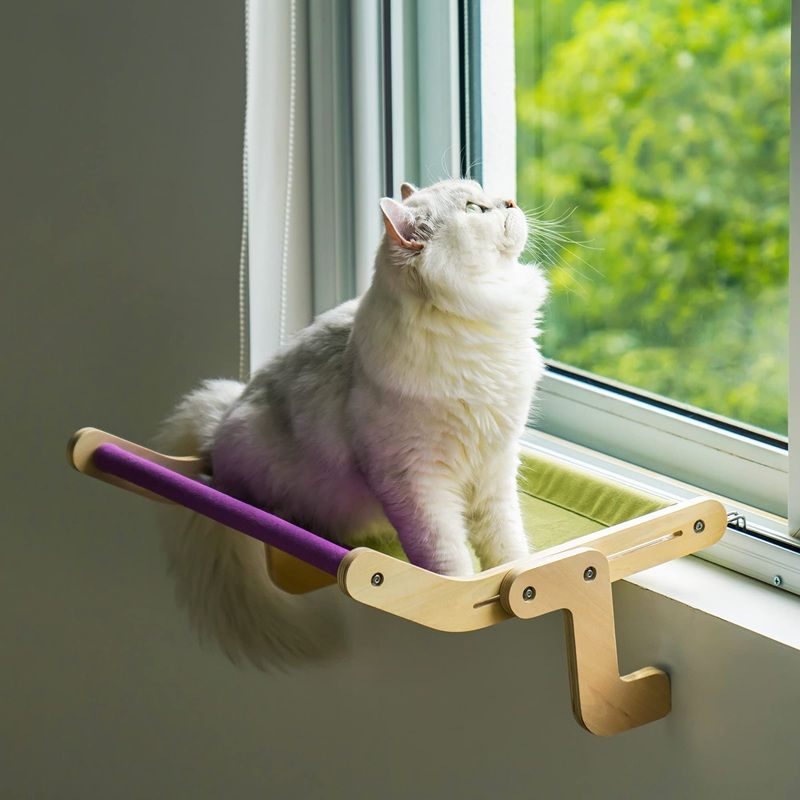
3. Give your cat the best window views
Set up a comfortable perch near a window to create a front-row seat to the outside world. Cats are fascinated by bird activity, passing wildlife, and changing scenery.
By providing a window view, you enable them to engage with the sights and sounds of the outdoors, stimulating their senses and preventing boredom. It is a great solution for indoor cats, or outdoor cats forced to stay inside for a while!
4. Build your cat their very own “catio”
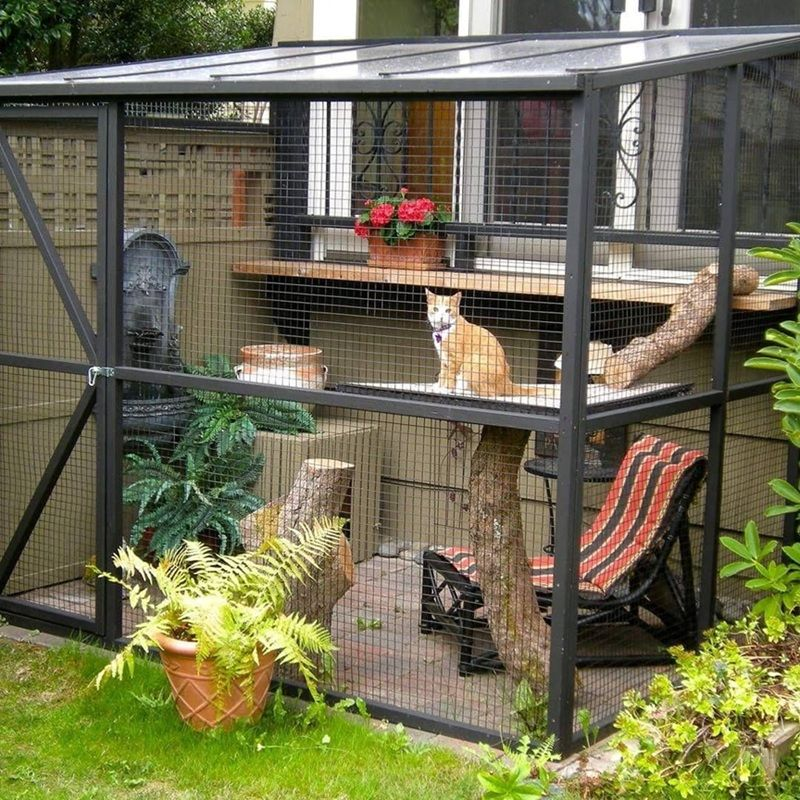
If you have the space and resources, consider building a cat enclosure that allows your indoor cat to experience the outdoors safely. A catio can be a small window box or a larger, enclosed area connected to your home or placed in your backyard. It provides cats with fresh air, sunshine, and the opportunity to engage with nature while protecting them from potential hazards like traffic or predators.
Catio’s often feature perches, climbing structures, and interactive toys to keep your feline friend entertained. Not only does a catio offer enrichment and stimulation, but it also provides peace of mind knowing that your cat can enjoy the outdoors in a secure environment.
5. Schedule regular interactive playtime
Regular interactive play sessions with your indoor cat are vital for their physical and mental well-being. Use a variety of toys, such as wand toys or feather teasers to mimic prey-like movements.
Engage in play sessions that encourage jumping, pouncing, and chasing, allowing your cat to release energy and express their natural hunting instincts.

Sources: