
Reptiles are interesting animals that require a very specific environment to thrive and maintain optimal health. It is very important that reptile owners must pay attention to is the temperature in their enclosure. Proper temperature regulation is essential for the health and well-being of our cold-blooded buddies such as snakes, turtles, gecko’s, bearded dragons, iguana’s etc.
Understand the thermoregulation needs of your reptile pet
Reptiles are ectothermic (cold-blooded) animals, relying on external heat sources to regulate their body temperature. They cannot, as mammals, generate their own body heat. Reptiles are dependent on their environment to warm up or cool down. When they live in an enclosure, it is imperative that their owners create a suitable thermal gradient within the enclosure. A thermal gradient is the range of temperatures within a such a habitat. By providing different temperature zones, reptiles can move around and choose the spot that best suits their needs at that time. This allows them to optimize their metabolism, digestion, immune system, and activity levels.
Maintain the optimal temperature range
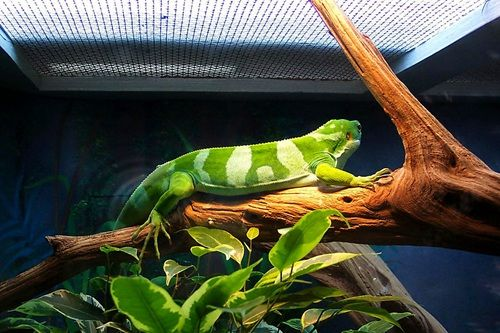
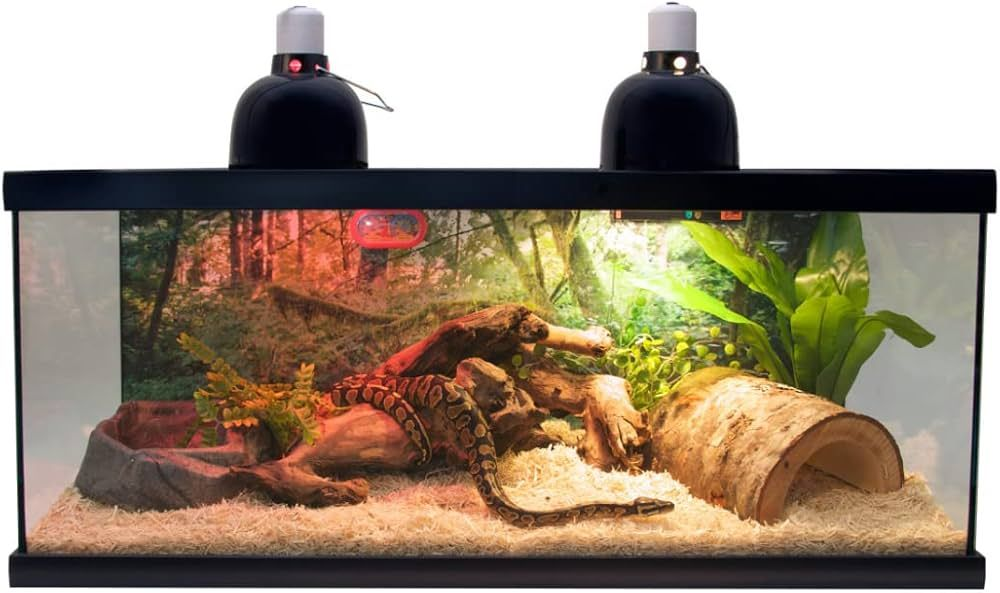
Different reptile species have varying temperature requirements. Reptile owners must then understand the specific temperature range needed for their reptile. Generally, reptiles require a warm side with a basking spot, along with a cooler side where they can retreat to relax and decrease their body temperature. To achieve the optimal temperature range for your reptile, you can use various heating products and reptile temperature controllers such as:
- Basking & Heat Lamps
Both bulbs emit heat and white light. The difference is a subtle one in the color of light that your animals are displayed under. Most basking bulbs are incandescent or halogen bulbs that emit heat and some light visible to humans and reptiles but not any form of UV light (including UVB or UVA light). Most fluorescent terrarium bulbs provide needed UVB (and UVA) but do not provide enough heat for basking. Red lights give off a low light that lets you see your reptile but isn’t likely in the pet’s visible color spectrum. However, some people think reptiles might still be able to see the light, so black heat lights emit even less visual light while still providing heat for nighttime. It is important to do proper research on the correct equipment you will need for your reptile.
- Heating Pads and Ceramic Heaters
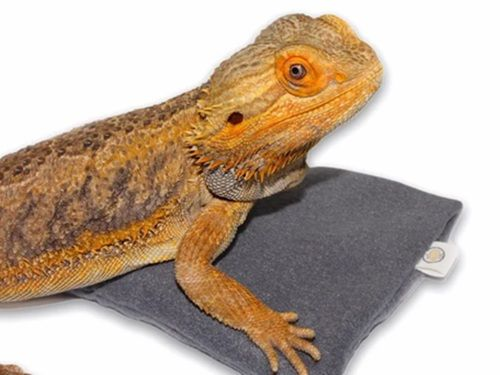
Ensuring the well-being of your scaly companions is paramount. One crucial aspect often overlooked by many novice reptile owners is the significance of a reptile heating pad. These specialized heating pads play a vital role in creating a comfortable and safe environment for your cold-blooded pets. By mimicking the warmth of the sun, heating pads help regulate your reptile’s body temperature, aiding in digestion, metabolism, and overall health. It should be noted that heat mats are designed to provide contact heat (i.e. the animal sits on the mat for warmth). They do not do a good job of raising the ambient temperature in an enclosure, so if a higher temperature is required throughout the vivarium, a ceramic heater would be better suited to the job.
- Rheostat and Thermostat
If you want to set up an easy system for controlling the temperature in your reptile’s habitat, attaching a thermostat or rheostat to the heat source can help. Using one of these devices can make temperature control more hands-off. So, what is needed? They do similar things in different ways. A thermostat helps to maintains a specific temperature. A rheostat controls how much heat a lamp or heat mat puts out, keeping that constant without regard for the actual temperature. Neither one can make the heat device any warmer than it would be if plugged directly into the wall. The one you need, depends on what you are trying to do.
How Does a Rheostat Work? A rheostat works like a light dimmer. Adjusting the dial controls how much electricity flows to the heating device. That controls how much heat it puts out. Once set, it stays on that setting, sending the same amount of electricity into the heating device until changed. That means it puts the same amount of heat into the habitat no matter what the temperature is in the room. Which means the temperature in the habitat will rise and fall the same as the room temperature. The absolute temperature in the habitat and room will be different, but the change will be the same. So, for example, let’s say your room is 21° C and you have adjusted the rheostat so that it puts out enough heat that the habitat is at 24° C. If the heat in the room falls to 18° C, the habitat temperature will also fall, to about 21° C. If you want the temperature to go back up to 24° C, you need to manually adjust the rheostat.
How does a Thermostat Work? When a thermostat is used, it is set to a specific temperature and put in the habitat. It will then keep the temperature in that spot within a small range around the set temperature. The temperature swings vary by device but can be as much as 5 degrees above or below the set temperature. There are two basic kinds of thermostats: The simplest are just on/off devices. They turn the heater/lamp on when the temperature drops too much, and off when it gets too warm. These are the kinds that have the biggest temperature swings. Proportional thermostats are a “smarter” kind of thermostat. Instead of turning on or off completely, they can increase or decrease the amount of electricity going to the device. They are seen as a cross between a rheostat and an on/off thermostat. They let you vary the amount of electricity going to ther heater like a rheostat. But they can change the amount by themselves, in response to changes in temperature.
The advantage of proportional thermostats is the temperature rises and falls more slowly, and the temperature swings are smaller. This gives better temperature control. Thermostats can also be analog (with a dial) or digital.
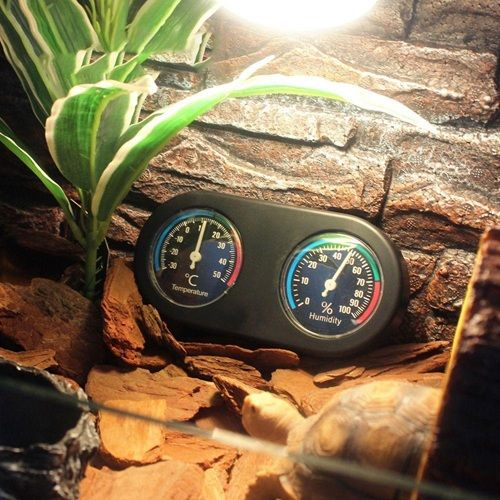
Which Should be used to control a heat lamp? No easy answer here. If a heat lamp is used that also produces white light, the simple on/off thermostats will basically just make the light flash on and off all day and night. This can be disturbing for both reptile owner and pet. Nighttime red bulbs will also flash, although it may be less disturbing since these generally give off only a faint light. But the constant flashing can weaken the bulb’s filament and cause the bulb to burn out quicker. A proportional thermostat will solve the flashing problem, because the light will just change intensity, not completely turn on and off. Of course, a rheostat will keep the light and heat output at a constant.
Some bulbs can’t be used with thermostats or rheostats. Many fluorescent bulbs also don’t work with dimmers. If a ceramic heat emitter is used, which doesn’t give off light, it can use any controller, including an on/off type thermostat. No matter what kind of heat lamp is used, if the temperature in the room fluctuates a lot, the habitat is better off with a thermostat, since it will maintain a stable temperature without you having to reset it constantly. But if the room temperature is kept stable, a rheostat (or even just a regular lamp dimmer) will work fine and generally cost less.
How should you control the heat in a heated rock? Be careful, as reptiles have been known to get burned on ones that got too hot. If you want to do this, attaching the rocks to a rheostat can help prevent this and make them safer for your pet. The rheostat would “dim” the heat output of the rock so it can’t overheat. You can adjust it so that it’s warm enough to bask on but not so hot it will burn your pet. Keep in mind that you will need to use a thermometer to measure the temperature of the rock’s surface (not the air around the rock) as you adjust your rheostat. You also need to check the temperature regularly to be sure the rheostat is still working. Do not use an on/off thermostat to control this, because the temperature fluctuates too much, and that could allow the rock to get too hot.
It is very important to read the information manufacturers provide about their products. Certain bulbs need to be plugged directly into the wall. And some controllers are not suitable for certain heating devices. Often this information will be on the packaging or in the manual. Each thermostat and rheostat have a maximum wattage it supports. Plugging too much into it could cause it to fail prematurely. This is usually only an issue if you’re plugging two devices into one controller.
Potential consequences of incorrect temperature regulation
Failure to maintain the appropriate temperatures can harm your reptile physically and mentally.
Here are a few potential issues that may arise:
- Metabolic Disorders: Insufficient heat can slow a reptile’s metabolism, leading to poor digestion and nutrient absorption. Conversely, excessive heat can accelerate metabolism, causing dehydration and other metabolic disorders.
- Respiratory Problems: Inadequate temperature regulation can weaken a reptile’s immune system, making it more susceptible to respiratory infections. Cold temperatures can also impair their respiratory function, leading to breathing difficulties.
- Behavioural Issues: Reptiles rely on temperature cues to regulate their activity levels. Incorrect temperature gradients can disrupt their natural behavioural patterns, causing stress, lethargy, or hyperactivity.
Maintaining the proper temperature range in a reptile enclosure is vital for the overall well-being of our pets. By prioritizing temperature regulation, providing a suitable temperature gradient, and regularly monitoring it, you are taking a significant step toward a comfortable environment for your reptile and ensuring their optimal health and happiness.
Sources: