
Adult cats and senior cats have less caloric intake requirements, averaging about 20 calories per half a kilogram of body weight (45 calories/kg of body weight) a day.
An example of calories per day based on average weights for the categories:
- Kittens 0 to 4 months with a weight range of 0.5 – to 2.3KG s: 77.38 to 353.2 kcal
- Kittens 4 months to adult with a weight range of 2.5 to 4.5KG s: 258.73 to 453.1 kcal
- Spayed/Neutered adult about 4.5KG s: 348.1 kcal
- Intact adult about 4.5KG s: 391.6 kcal
If they have a deficiency or are not getting a balanced diet, they may require supplement nutrients. Always consult your vet before administering supplements or medication to your cat. Choose high-quality pet food that meets pet food law requirement’ standards, and provides essential vitamins, minerals, and nutrients. Monitor your pet’s weight and adjust feeding amounts to prevent obesity. Treats should be a small part of their daily intake.
Kitten food is for Kittens. Why?
The best time to introduce kittens to solid food is when they’re still nursing from their mother. Kittens are naturally curious, and their food preferences tend to follow those of their mother. You may set out both wet and dry foods around 5–6 weeks of age to allow kittens to explore solid food at their own pace.
If kittens are bottle-fed, 5–6 weeks of age is also an important time to begin to replace some of their formula with solid food. Kittens are typically ready for an all-solid food diet by 7–8 weeks of age. Over the next few weeks, you can incrementally increase the amount of solid food available to the kittens while reducing their time nursing.
A kitten’s mother may also instinctually remove herself from her kittens to encourage this process. You can also reduce the amount or frequency of formula to encourage kittens to explore and taste solid food.
Whether you decide to feed kittens wet food, dry food, or a mix of the two will depend on their preferences and the health benefits you want to achieve.
Kittens inherit much of their diet preferences from their mother (in utero), so the food their mother was eating during pregnancy, and nursing will likely influence the type of food your kitten will eat.
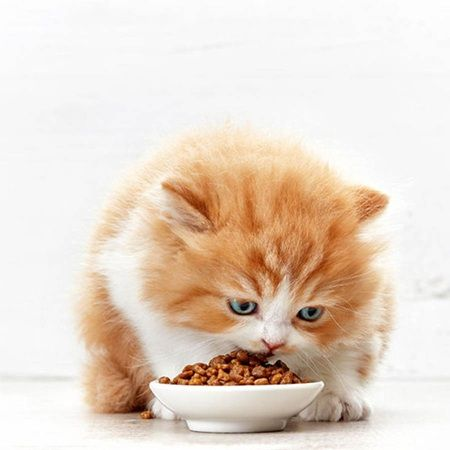
Feeding kittens both wet and dry food has benefits, including the following –
Wet food benefits for kittens include:
- High moisture content. Wet food can increase the amount of water in your kitten’s diet to ensure they stay well-hydrated.
- Mixability. Wet food is useful for being able to mix supplements like fish oil and probiotic powders into their diet.
- Increased palatability. Wet food is easy to warm up in the microwave to increase the aroma if your kitten has nasal congestion or has had any changes in their appetite.
Dry food benefits for kittens include:
- Dental health support. Dry food is helpful for dental health because as your kitten chews the hard kibble pieces, the rough edges scrape against the teeth to help remove plaque and tartar buildup.
- Mental and physical activity stimulation. Dry food can be used as treats for training or it can be placed in puzzle toys or food-dispensing toys for mental enrichment.
- Cost-efficient. Feeding dry food can also be a more economical option for cost-conscious pet parents.
Adult food is best for Adults. Why?
As they change from a playful kitten to a full-grown adult cat, it’s important to make sure they have all the right nutrients they need to stay happy and healthy. To keep in tip-top condition, your cat’s diet needs the right balance of proteins, fats and oils, minerals, vitamins and carbohydrates.
Once the cat becomes an adult, at about one year of age, feeding once or twice a day is appropriate in most cases. Senior cats (10 years of age and older) should maintain the same feeding regimen unless owners are otherwise instructed by a veterinarian.
To avoid digestive upset and to allow your kitten to adjust to their new cat food, we recommend transitioning over a seven-day period. Start with 75% of their kitten formula mixed with 25% of the new adult formula. Over the span of the week, slowly increase the percentage of the new food you add. By the end of the 7- day span, if your cat is eating the whole serving and you don’t observe anything abnormal (loose stool, vomiting, excessive itching, etc.), you can go ahead and fully transition to the new adult cat food recipe. The easiest transition for your cat will be to feed them similar protein sources. For example, if you are feeding a chicken-based kitten recipe, we recommend transitioning to a chicken-based adult recipe as well.
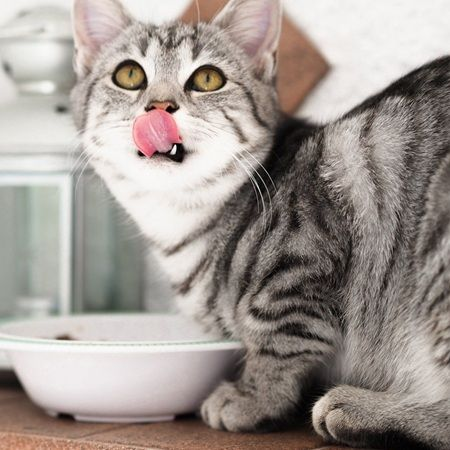
Canned vs. dry cat food: Which one is better?
The experts haven’t reached complete consensus. But most agree on some of the pros and cons of dry and wet adult cat food.
Dry adult cat food:
- Is more economical
- Is convenient because you can leave it out and it doesn’t spoil as easily
- Is energy dense, meaning a cat can consume lots of calories quickly
- Has about 10% moisture content
- Tends to have more carbohydrates and less protein than wet food
- May be only slightly better than canned food at preventing dental disease
Canned adult cat food:
- Is more expensive
- Can spoil more easily and requires refrigeration after opening
- Is less energy dense than dry food
- Has up to 78% moisture content
- Tends to have more fat and protein – especially animal protein – and fewer carbohydrates than dry food
The high moisture content in wet food can be beneficial to cats with urinary tract problems, diabetes, or kidney disease. It can help compensate for cats’ low thirst drive, which may be partly due to their evolution as desert animals. More study is needed to confirm whether feeding wet food can help prevent some of these problems from developing in the first place.
Higher protein levels more often found in wet food may be of benefit to strict carnivores like cats, who depend on consuming animals to meet their nutritional needs and require up to three times the protein of omnivores.
Seniors need food to support their Senior lifestyle. Why?
A good senior cat diet provides concentrated high-quality protein, controlled levels of fat, and easy-to-digest carbohydrates for energy. Key minerals support ageing joints, and vitamins, along with proteins, help support the ageing immune system. The goals for feeding a senior cat are twofold: Prevent or manage disease and increase longevity.
If your cat has been diagnosed with a condition that is known to be influenced by nutrition, it may be time for a switch. This is one of the main factors to consider when deciding if your cat needs a senior food.
Getting the right nutrient balance in cat foods for older cats is important because our feline friends have very specific needs when it comes to protein, amino acids and vitamins. Cats have high protein requirements and can quickly become deficient in some amino acids and vitamins. This is why you should never feed your cat a vegetarian diet. The best senior cat foods will be carefully tailored to provide the optimum levels of nutrients.

As they age, senior cats often become thinner, losing both fat and muscle mass. Studies show that cats’ ability to digest both protein and fat decreases as they enter their senior years. Fat contains more calories per gram than protein or carbohydrates. So, it is important to feed a high human-grade, species-appropriate diet, including quality protein and fats, to ageing cats, to provide them with easily digestible calories.
A common ailment often seen in elderly cats is chronic kidney disease. Levels of phosphorus in the diet need to be managed in these cases, but this doesn’t always mean restricting protein. Instead, the type of protein fed should be reviewed. For example, this might mean moving from a kibble diet that may use grain as part of its protein source to a fresh food diet high in meat or fish and without grains.
Your vet will be able to advise on what to feed an elderly cat, so always talk to them before adapting your cat’s diet, and remember to introduce any feeding changes gradually while supporting your cat’s digestive system with pet probiotics (beneficial gut bacteria).
Many senior cat diets contain ‘functional foods’, with ingredients that may help to improve a cat’s quality of life as they mature. These include additional vitamins and minerals to support healthy cognition and memory, and Omega-3 fatty acids, from sources such as fish oil or New Zealand green-lipped mussel extract, to help maintain joint health and decrease inflammation. Fatty acids can also help to keep your cat’s skin and fur healthy. Some diets may also include the addition of herbs to further support the health of ageing cats.
Learn how to read a pet food label
Ingredients: The difference between “ingredients” and “nutrients” needs to be clarified. Ingredients are the vehicles that provide nutrients, while nutrients are food components that support life and are metabolically useful. For example, lamb is an ingredient that provides nutrients such as protein, fatty acids, and vitamins. Ingredients are listed in descending order by weight. The high-water content in chicken, beef and lamb makes these ingredients weigh more than dry ingredients such as grains, meals, and vitamins, so they are often listed first.
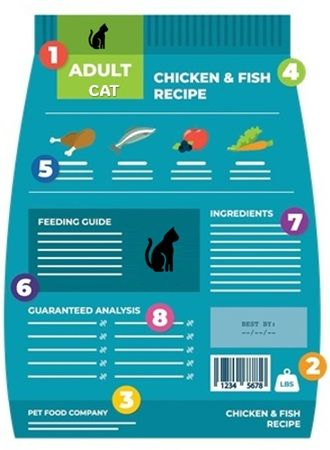
Guaranteed Analysis: Indicates minimum or maximum levels of nutrients such as protein, fat, fiber, and moisture. Does not indicate or provide exact levels of nutrients in the pet food. Is not a guarantee of the nutritional quality of the food. Moisture levels in pet foods vary, making it nearly impossible for an average cat parent to accurately ,compare nutritional information.
Nutritional Adequacy Statement or PFI or other animal food law statements. These organizations that set the nutritional standards for pet foods sold in South Africa and other countries. This legally required statement verifies the testing method used to determine nutritional adequacy. The statement indicates whether the food provides complete and balanced nutrition for a specific life stage of your pet (growth, adult, pregnant/nursing), or if the product is nutritionally adequate for all life stages. Beware if the package states the food supports “all life stages.” The product likely contains excessive levels of some nutrients necessary for the most demanding life stage, which is growth. For example, it might contain higher levels of protein and calcium for kittens, but those levels are inappropriate for an adult or senior cat.
As a pet parent, you should know that nutritional excesses can be as harmful and are more common than nutritional deficiencies.
The manufacturer’s toll-free/contact number or other detail where they can be reached. The package label should contain the manufacturer’s name and phone number. We encourage you to call the companies to learn more about their products, including place of manufacturing, actual nutrient content, calories, and palatability of your prospective food choice or visit their website.
Source : https://www.hillspet.co.za/pet-care/nutrition-feeding/reading-a-pet-food-label1
Important:
Always consult your veterinarian when unsure about what to feed your cat, and when.
Some diets are general balanced diets providing your cat with everything they need, whilst other food might be necessary to feed them food that assist with a specific disease (such as kidney failure).
Be aware of your cat’s overall well-being and take them to the vet immediately if, e.g.
- There are Changes in Appearance
- Increased Vocalization
- Decreased Socialization
- Excessive Thirst
- Refusal to Eat
- Frequent Vomiting
- Weight Loss.
Note:
Always have enough clean and fresh water available for you cat.
Limit treats and keep then age and lifestyle appropriate. Remember that treats are not food.
The PFI and their importance:
In South Africa, our pet food is overseen by the Pet Food Industry Association of Southern Africa (PFI). Only buy food that has the PFI logo on from reputable stores with refund options. Each country has safety regulations and the overseeing body’s logo should be visible on the bag/tin of food.
The PFI is dedicated to upholding quality standards that ensure the nutritional wellbeing of household pets. Representative of about 80% of the pet food market in South Africa, each member commits to manufacture and market food that meets internationally accepted standards as set out in Act 36 of 1947. The Department of Agriculture’s regulatory authority manages Act 36. The PFI aids industry in facilitating the complaint process, highlighting matters of non-compliance to the inspectorate of Act 36 for investigation.
For more information on the PFI, please read about them here: https://www.pfisa.co.za/